


LBI Home Pricing
Selling Your Home in the Long Beach Island NJ Real Estate Market
Explore how Long Beach Island homes are priced, learn the key factors that influence selling in the LBI real estate market, and understand how to choose the right listing price for your property. Above all else, accurate pricing is essential. Today’s buyers are highly informed, and with so much data available online, an overpriced home will struggle to gain attention or generate showings. Setting the right price from the start ensures your home stands out, attracts qualified buyers, and positions you for a successful sale on Long Beach Island.
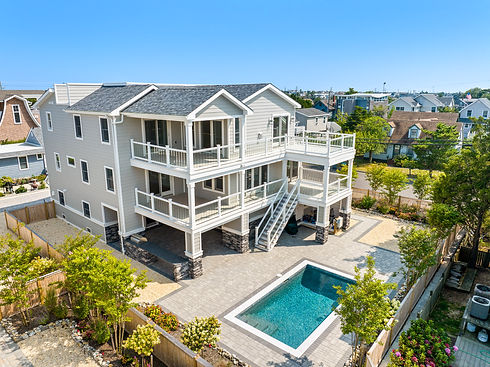
Pricing Your Home in the LBI Real Estate Market
LBI Home Pricing | Selling LBI Real Estate | Determining the Right Listing Price
Accurately pricing your Long Beach Island home is one of the most important steps in achieving a successful sale. A strong pricing strategy should reflect current market conditions and recent comparable sales, ensuring your property is competitively positioned in the LBI real estate market. Understanding how buyers evaluate value—and how your home stacks up against similar listings—is essential to attracting interest and maximizing your return.
Below, I’ve outlined several effective approaches to pricing a home on Long Beach Island, from analyzing sold comps to understanding land value, location premiums, rental income potential, and market timing. I’ve also included links to helpful articles I’ve written that dive deeper into the nuances of home pricing in the LBI real estate market. These resources will give you a clear picture of how to determine the right listing price and how proper pricing can set your home up for a strong, successful sale.
LBI Real Estate market Pricing
LBI New Jersey Real Estate
Pricing a home correctly in the Long Beach Island real estate market is one of the most important factors in achieving a successful sale. In today’s digital age, buyers have instant access to a wide range of information—from recent sales to neighborhood price trends—which makes accurate pricing more important than ever. Online valuation tools such as Zillow’s Zestimate often appear in a buyer’s early research. While these automated estimates can be highly inaccurate on LBI due to the island’s unique lot configurations, elevation variances, and wide range of property types, they do influence buyer expectations and create an initial sense of value.
Because of this, sellers should rely on multiple valuation methods when determining the best listing price for a Long Beach Island home. Using several approaches acts as a “cross‑check,” creating a more accurate and defensible pricing strategy that aligns with both buyer behavior and true market value.

Focus on First Impressions—Inside and Out
The most reliable method of pricing a home on Long Beach Island is to review comparable sales, often referred to as “comps.” A strong pricing analysis should include active listings, recently sold properties, and pending sales. To determine accurate comparables, a listing agent must evaluate factors such as:
-
Location (Oceanside, Oceanfront, Bayside, Bayfront, Lagoonfront)
-
Condition and overall level of updates
-
Lot size, elevation, and flood zone
-
View corridors and distance to the beach
-
Age of construction and architectural style
For sellers, an important question to ask is whether the listing agent has personally been inside the comparable homes. Without firsthand knowledge, it is nearly impossible to judge the true similarities—or differences—between properties. On an island where two homes on the same street can vary drastically in value, firsthand evaluation is essential.

Price Per Square Foot on Long Beach Island
Price per square foot can be a helpful benchmark, but it must be used carefully in the LBI market. With the exception of new construction or nearly new homes, this metric can be misleading. Values fluctuate significantly based on:
-
Location and type of street
-
Presence or absence of water views
-
Style, age, and condition of the home
-
Lot size and buildable area
For new construction—where finishes, layouts, and amenities are more consistent—price per square foot becomes far more reliable. This method is especially useful for builders, investors, and sellers evaluating the return on a spec home in the Long Beach Island market.

Replacement Cost & New Construction Value
A large portion of LBI real estate activity involves new construction, teardown opportunities, or properties purchased solely for their land value. If your home is older—such as a Cape Cod or single‑story ranch—it may be more valuable as a building opportunity than as a traditional resale home. In these cases, determining market value often involves:
-
Analyzing recent new construction sales
-
Subtracting estimated building costs
-
Factoring in builder overhead and profit margins
-
Understanding zoning, setbacks, and allowable build size
This method helps estimate land value and is essential for both sellers and investors. It can also be used to price newer homes by reversing the calculation and comparing land value plus construction costs to current market prices.

Beware of Agents Who “Buy the Listing”
Sellers in the LBI real estate market should be cautious of agents who engage in a practice known as “buying the listing.” This occurs when an agent intentionally suggests an unrealistically high listing price simply to secure the listing—knowing the home will not sell at that number. Their goal is to market the listing to generate buyer leads and then push for multiple price reductions over time.
If you interview several agents and one price recommendation is dramatically higher than the others, that’s a red flag. Overpricing from the start can lead to extended days on market, reduced buyer interest, and a lower final sale price. Always choose an agent who supports their pricing recommendation with clear data, comparable sales, and a well‑explained strategy—not empty promises.

Pricing by Location on Long Beach Island
Long Beach Island is not a one‑size‑fits‑all market. Values shift dramatically even within the same town based on:
-
Oceanside vs. oceanside‑mid‑block
-
Oceanfront vs. semi‑oceanfront
-
Lagoonfront vs. open‑bayfront
-
Street width, beach access points, and dune height
-
Flood zone differences (X, AE, VE)
A proper pricing strategy should compare your home only to true micro‑location matches. This avoids distorted pricing and ensures sellers understand the real value of their specific area. Often, market prices can vary by 20% or more from location to location, so the difference is significant in a high-value market like the one on Long Beach Island!
Additional Pricing Strategies for the LBI Real Estate Market
Market Absorption Rate (Supply & Demand Analysis)
Absorption rate measures how quickly homes are selling in a specific segment of the LBI market.
It helps determine whether you’re in:
-
A seller’s market (low supply, high demand → stronger pricing)
-
A buyer’s market (higher supply → more competitive pricing needed)
-
A balanced market (neutral conditions)
This method is especially useful on LBI because certain categories—like oceanfronts, bayside cape cods, or new construction—can have very different supply levels.
Rental Income Valuation (Investment‑Oriented Pricing)
For homes with strong rental histories—or strong rental potential—a portion of the value can be derived from income. Investors often evaluate LBI homes using:
-
Cap rate
-
Projected gross rental income
-
Cash‑on‑cash returns
Even primary‑home buyers often appreciate knowing the property could generate income. Including this angle helps justify pricing in competitive segments like oceanside duplexes, new construction, and larger beach‑block homes.
Seasonal Pricing Considerations
The LBI market changes throughout the year. Prices can be influenced by:
-
Buyer migration patterns
-
Rental booking cycles
-
Weather‑driven showing activity
-
When second‑home buyers are actively shopping
Sellers who understand these cycles—and price accordingly—often see better results.
Pricing for Search Band Visibility
Buyers often use online price filters (e.g., “Show me homes under $1.5M”).
Pricing just above a major search threshold can reduce exposure.
Smart strategy:
-
Price at $1,499,000 instead of $1,525,000 to appear in more searches
-
Avoid awkward ranges like $1,574,000 that don’t match buyer psychology
-
Consider where buyers naturally cluster (e.g., $899k, $999k, $1.499M, $1.999M)
This is extremely relevant for Zillow, Realtor.com, and your MLS exposure.
Adjusting for Elevation & Flood Insurance Impact
On LBI, flood compliance has a major impact on value. When pricing, consider:
-
Whether the home is elevated on pilings
-
FEMA flood zone
-
Cost of flood insurance
-
Compliance with current building codes
Homes that are up‑to‑date structurally often command a premium. This is a big factor that many sellers overlook.
Time‑Adjustment of Comparable Sales
Because the LBI market can shift quickly, comps from 6–12 months ago may not reflect current conditions.
Agents should apply time adjustments, especially in:
-
Fast‑moving markets
-
Post‑storm markets
-
Hot new construction cycles
This is a more professional and appraiser‑level pricing technique.
Appraisal‑Style Adjustments (Amenity-Based Valuation)
Similar to how professional appraisers work, you can adjust values based on:
-
Pools
-
Views
-
Larger lots
-
Additional bathrooms
-
Garage space
-
Outdoor living areas
-
Newer roofs, HVAC, siding, decks, etc.
This method helps to quantify the premium your home commands over older or less updated properties.
Nathan Colmer
C: 609-290-4293 O: 609-492-1511 Email Me
Pricing a home correctly on Long Beach Island takes local expertise, detailed market knowledge, and a clear understanding of what buyers value most. Whether you’re navigating comparable sales, evaluating land value, or positioning a property as a new‑construction opportunity, I’m here to guide you through every step with data‑driven insights and hands‑on experience in the LBI real estate market. My goal is to help you set the right price from day one, attract serious buyers, and maximize your home’s value. If you’re considering selling or want a personalized pricing analysis, I’m always available to help.
