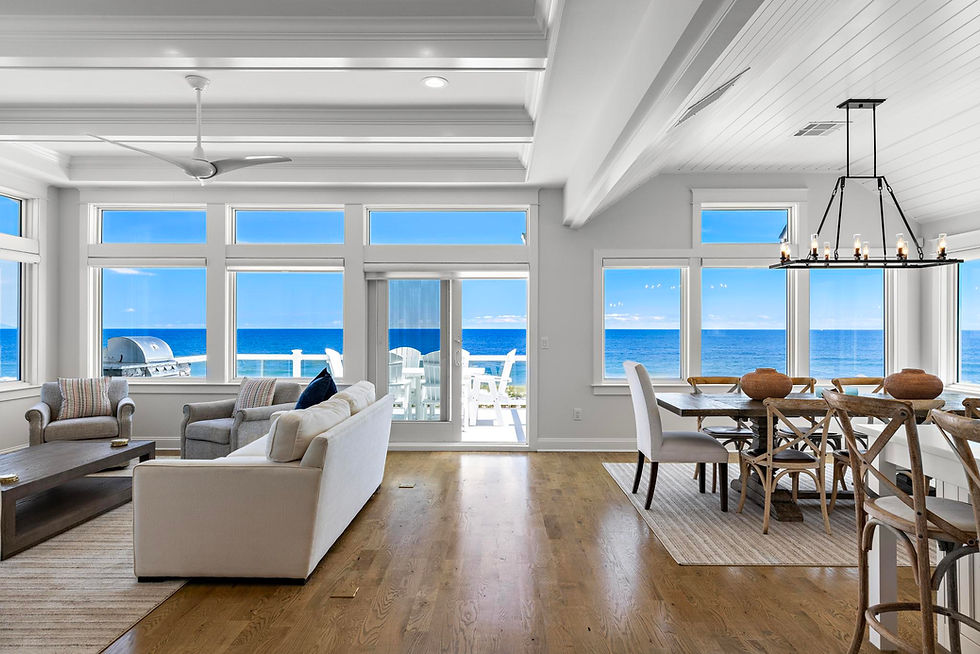



Building a New Home on LBI After the September 2026 Nor'easter
Building a New Home on Long Beach Island New Jersey After the September 2026 Nor'easter
Building a New Home on LBI After the September 2026 Nor'easter: Considering building a new home on LBI after the September 2026 nor'easter? Learn about elevation, flooding, garages, teardowns and new construction on Long Beach Island.

Building a New Home on LBI After the September 2026 Nor'easter
The September 2026 nor'easter was one of the more significant storms to impact Long Beach Island in recent years, bringing multiple high tides, substantial flooding, strong winds, and beach and dune erosion. For anyone considering building a new home on Long Beach Island, the storm provides a real-world reminder that designing and building on a barrier island requires careful consideration of flooding and coastal weather.
Building a new home in the LBI real estate market involves much more than choosing the right number of bedrooms, designing a beautiful kitchen, adding a pool, or maximizing ocean and bay views. Elevation, flood exposure, the location of living space, garage design, mechanical and electrical systems, local building requirements, and the home's long-term functionality should all be part of the planning process.
The good news is that the housing stock on Long Beach Island has changed considerably since Hurricane Sandy in 2012. Many older homes have been raised, renovated, rebuilt, or completely replaced. Buyers are also far more accustomed to discussing flood zones, elevation, flood insurance, and storm preparation than they were before Sandy. The September 2026 nor'easter gives us another opportunity to evaluate how different properties performed and what buyers can learn when planning new construction on LBI.
By: Nathan Colmer | LBI Real Estate Agent | The Van Dyk Group
Cell: 609-290-4293 | Office: 800-222-0131 | ncolmer@vandykgroup.com
What Did the September 2026 Nor'easter Teach Us About LBI Homes?
One of the most important lessons from the September storm is that not all flooding affects a property the same way. Many newer or elevated LBI homes have their primary living areas well above their garages and other lower areas. As a result, water can enter a garage during a significant flood event while the house's main living areas remain dry.
That distinction is important when designing new construction. Buyers should think carefully about what to place on the lowest level of the property. Garages, storage areas, electrical components, mechanical equipment, and other systems can still be vulnerable even when the primary living space is elevated.
No house on a barrier island is completely immune to coastal weather. However, thoughtful planning and modern construction can help determine how a home responds to significant flooding.
Elevation Is an Important Part of Building a New Home on LBI
Elevation has been a key part of the LBI construction conversation since Hurricane Sandy, and the September 2026 nor'easter once again shows why.
When planning a new LBI home, buyers need to understand the flood characteristics of the property and the current regulations governing new construction. Elevation requirements can influence foundation design, garage placement, stairs, the first level of living space, overall building height, and ultimately the finished house's layout and appearance.
Construction and flood-related requirements can also change over time. Anyone considering an LBI building project should work with qualified architects, engineers, builders, and the appropriate municipal and state professionals to determine which current requirements apply to the individual property.
This work to understand a home's elevation in the LBI real estate market should ideally begin before purchasing a teardown or building lot, not after closing.
Building in an LBI Real Estate Flood Zone
Buyers frequently ask whether a particular Long Beach Island lot is in a flood zone. While that is an important question, it should only be the beginning of the investigation.
Anyone considering new construction should understand the property's available flood information, required elevations, lot dimensions, setbacks, lot coverage, overall height restrictions, foundation considerations, and local zoning. These factors can significantly affect what you can actually build.
This is especially important from a real estate investment standpoint. Two lots may appear relatively similar on paper but offer very different building opportunities. The value of an LBI building lot is closely connected to both its location and what can realistically be constructed on it.
Garages Deserve Special Attention After the September Nor'easter
One of the clearest lessons from the September 2026 nor'easter involves garages and lower-level areas.
An elevated LBI home may perform well by keeping its main living areas above floodwater while the lower garage fills with water. However, a homeowner can still suffer significant damage if valuable belongings, vulnerable building materials, or important equipment are stored there.
When designing a new LBI home, buyers should discuss the intended use of the garage and lower areas with their architect, engineer, and builder. They should also consider where important mechanical and electrical components will be placed.
Rather than simply asking, "Can I put a garage under my LBI house?", a better question is, "How should I design the lower portion of this house knowing that flooding can occur?"
That is a far more useful way to approach new construction on a barrier island.
New Construction Remains Attractive to LBI Real Estate Buyers
New construction has become an important part of the Long Beach Island real estate market. Buyers are often drawn to newer homes because they offer modern layouts, updated building systems, more bedrooms and bathrooms, elevators, pools, improved outdoor living areas, contemporary finishes, and construction completed under newer requirements.
Following the September 2026 nor'easter, I expect buyers to pay even more attention to how individual houses are constructed. Elevation, garage design, location of mechanical systems, flood history, and how a property performed during the storm are likely to become increasingly common topics during the buying process.
This could give newer homes and well-planned new construction an added advantage. Buyers aren't simply interested in a beautiful house. They increasingly want to understand how the property functions as an LBI beach house.
Should You Buy an Older LBI Home and Tear It Down?
Buying an older home mainly for the land's value has long been a strategy in the LBI real estate market. For the right property, purchasing an older house and replacing it with new construction can still make sense.
However, the purchase price of the existing house is only one part of the investment. Buyers also need to consider demolition, architecture, engineering, construction, financing, permits, site work, utilities, carrying costs, insurance, landscaping, pools, and other project expenses.
If an older LBI home costs $1.5 million and you plan to tear it down and build a new house, you aren't making a $1.5 million investment. Your investment is the total project cost required to acquire the land and complete the finished home.
I prefer to compare that total investment with the anticipated market value of the new house once construction is complete. Recent sales of comparable new construction can help determine whether the numbers make sense.
Could the September Nor'easter Create New Construction Opportunities?
The September 2026 storm may create some individual opportunities for buyers interested in new construction. A homeowner with an older property may decide they do not want to undertake repairs or additional renovations. Another owner may conclude that the property has reached a point where replacement makes more sense than continued improvement.
The storm may also accelerate selling decisions for some owners who were already considering putting their property on the market.
For buyers interested in building, these situations can potentially create opportunities. However, a storm-damaged property is not automatically a bargain, and an older house is not automatically a good teardown candidate.
The acquisition price, lot characteristics, location, zoning, potential new-home design, construction costs, and expected finished value must all work together.
What Should You Investigate Before Building a New LBI Home?
Before buying a property with the intention of building, I recommend viewing the project from both a construction and a real estate perspective. Buyers should understand the lot dimensions, zoning, flood information, potential house size, setbacks, applicable height limitations, foundation requirements, estimated construction costs, and realistic value of the finished property.
Different professionals will help answer different parts of that equation. Architects, engineers, builders, attorneys, lenders, insurance professionals, and municipal officials may all have important roles depending on the project.
From a real estate standpoint, one of the most important questions is whether the numbers make sense. How much are you paying for the property? What are comparable newer homes selling for? What premium does the location command? How valuable are the lot dimensions, water views, oceanblock location, or waterfront position?
Building the right house is important, but the investment begins with buying the right property at the right price.
Frequently Asked Questions About Building a New Home on LBI
Is it safe to build a new home on Long Beach Island after the September 2026 nor'easter?
Long Beach Island is a barrier island, so coastal storms and flooding should always be part of the ownership and construction conversation. Rather than looking for a property with no flood exposure, buyers should understand the characteristics of the individual lot and work with qualified professionals to design and build appropriately for the location.
Should I buy an LBI home that flooded and tear it down?
Possibly, but a home's flood history alone does not determine whether it is a good building opportunity. Consider the location, land value, lot size, zoning, purchase price, demolition costs, allowable construction, total project budget, and expected value of the completed home.
Does elevation matter when building a new LBI home?
Yes. Elevation can influence both the home's design and how its different levels interact with potential flooding. Buyers planning new construction should understand the current requirements that apply to the individual property and incorporate them into the design process from the beginning.
Should I speak with a builder before buying an LBI teardown?
Yes. If your purchase only makes sense if you can build a particular size or style of home, investigate the feasibility of that plan before purchasing the property. Buyers should also consult the other appropriate construction, engineering, architectural, and municipal professionals depending on the project.
Is new construction a good investment on LBI?
New construction can be an excellent investment when the numbers work, but buyers need to calculate the entire project rather than focusing only on the land price. Compare the purchase, demolition, design, construction, financing, carrying expenses, professional fees, and other costs with a realistic estimate of the completed home's market value.
Will buyers prefer newer LBI homes after the 2026 nor'easter?
The storm may lead buyers to pay greater attention to elevation, construction, garages, mechanical systems, and other flood-related characteristics. That may benefit well-designed newer homes, but buyers will still evaluate the entire property, including location, price, amenities, views, condition, and overall quality.
Building a New Home on Long Beach Island After the 2026 Nor'easter
The September 2026 nor'easter reminded everyone that living and building on Long Beach Island means understanding the realities of owning property on a barrier island. It also showed how differently individual properties can respond to the same storm.
For buyers considering new construction on LBI, the lesson shouldn't be to build higher or avoid certain areas. The better lesson is to investigate the individual property carefully, understand the current requirements, plan the house thoughtfully, and assemble an experienced team before beginning the project.
A successful new-construction project starts long before you demolish the old house or pour the new foundation. It begins with purchasing a property where the location, building potential, total investment, and anticipated finished value make sense.
If you're considering purchasing a teardown, vacant lot, or older home with the intention of building a new home on Long Beach Island, I can help you evaluate the real estate side of the project, including land value, recent new-construction sales, neighborhood pricing, location premiums, and the potential market value of the completed home.
If you're looking to buy, sell, or invest in LBI real estate, local knowledge can make a significant difference. I'm Nathan Colmer, a Long Beach Island real estate agent with more than 20 years of experience helping clients navigate the LBI real estate market. My experience includes vacation homes, second homes, investment properties, new construction, and residential sales throughout Long Beach Island.
I also personally invest in LBI real estate, giving me firsthand experience with the opportunities and considerations that come with owning property on the island. Whether you're buying your first vacation home, looking for an investment property, or preparing to sell, I can provide the local market knowledge, personalized guidance, and practical insight you need to make informed decisions.
By: Nathan Colmer | LBI Real Estate Agent | The Van Dyk Group
Cell: 609-290-4293 | Office: 800-222-0131 | ncolmer@vandykgroup.com